


Here’s your Monday dose of The AI Brief.
A week where the future arrived a little faster and a little stranger.
Plenty of breakthroughs, a few shocks, and one or two reminders that we’re building powerful systems on fairly wobbly rails.

📈 Trending Now
The week’s unmissable AI headlines.
💡 Innovator Spotlight
Meet the change-makers.
🛠️ Tool of the Week
Your speed-boost in a nutshell.
📌 Note to Self
Words above my desk.
📈 Trending Now
This week’s most important AI stories for founders, framers, and funders.
🔥 DeepSeek claims 2× training efficiency with a frontier-scale model — the first real crack in the GPU arms race
→ Chinese lab DeepSeek unveiled results showing its latest model achieves frontier-class performance at roughly half the compute cost, driven not by hardware but by aggressive algorithmic optimisation (sparse attention, custom schedulers, and compression-aware training loops). The announcement landed like a shockwave across the research world because it challenges the belief that only massive GPU clusters can push the frontier forward.
→ Industry analysts called this the most significant efficiency leap since Chinchilla, and policymakers in Washington immediately raised concerns about “algorithmic circumvention” of GPU export controls — a reminder that scaling laws aren’t just about silicon. The debate online was immediate and global: if DeepSeek can do this on leaner compute, what happens when efficiency innovation outpaces hardware restrictions?
→ This moment signals a real shift: the next frontier model may not be the one trained on the most GPUs, but the one trained most intelligently.
→ Founders: Track efficiency curves, not parameter counts — the winners in 2025–2030 won’t be the teams with the biggest clusters, but those who can deliver top-tier capability with the lowest cost base.
2. ⚖️ Meta under fire for blocking rival AI assistants inside WhatsApp
→ Meta is facing an antitrust probe over a new WhatsApp policy that limits third-party AI assistants and effectively gives Meta AI preferential access to more than 2 billion users. Regulators and commentators see this as an attempt to own the “default assistant” slot at the messaging layer, where most consumer and SME conversations already live.
→ Beyond the legal angle, the strategic play is simple: if Meta controls both the interface (WhatsApp) and the assistant (Meta AI), every other AI product becomes a plug-in at best.
→ Founders: Don’t bet your entire GTM on any single gatekeeper — build direct channels (email, community, events, owned product) alongside platform integrations.
2a. 💸 X hit with €120m fine over DSA breaches — Musk turns it into a free-speech war
→ The European Commission fined X €120m under the Digital Services Act for failing to meet obligations on deceptive blue-check design, transparency and data access for researchers.
→ Musk responded by calling for the EU to be “abolished” and cutting the Commission’s ad account, reframing a fairly technical platform-governance ruling as a global free-speech fight. Whatever your view, it shows how quickly compliance issues can turn into brand-level political theatre.
→ Founders: Treat trust and compliance as part of your brand — once regulators move, the story is no longer about the fine, it’s about whether people feel safe using your product.
READ MORE ON X. (warning: it is a rabbit hole of ummm!….. good luck)
What the fine is actually about (DSA obligations X allegedly failed):
Weak systems for detecting and removing illegal content.
Poor mitigation of disinformation and coordinated manipulation.
Opaque recommendation algorithms that shape what users see.
Limited data access for vetted researchers studying platform harms.
Misleading blue-check and identity-verification design.
Clumsy or unclear tools for reporting harmful or illegal content.
Patchy documentation of moderation decisions and appeals.
Key point:
This isn’t a censorship ruling — it’s a safety, transparency, and risk-management case under the Digital Services Act which were all clear and transparent.

The response and public outcry
Musk branded the EU a “bureaucratic dictatorship” and said it “should be abolished,” framing the fine as a direct attack on free speech.
US users amplified his stance, creating a wave of “free speech under attack” posts.
A common narrative emerged that the EU is trying to regulate American tech out of existence via compliance pressure.
Libertarian commentators warned this contributes to a “splinternet of speech norms” — Europe enforcing its own model of online governance.
Memes circulated depicting the EU as the “hall monitor of the internet.”
More technical explanations — that the case is about platform governance, not viewpoint moderation — received far less visibility.
WHAT A F*****D UP WORLD WE ARE LIVING IN RIGHT NOW where reality is confused with motivation with versions of truth.
Literally the best response was to turn this into a self serving marketing strategy for X and it worked…
BREAKING: 𝕏 is seeing record-breaking downloads in many countries in Europe 𝕏 is the #1 news app in every European country.

2b. 📱 Apple Intelligence delay shows how AI products may fragment by region
→ Apple has confirmed that Apple Intelligence won’t arrive in Europe at the same time as other markets, citing concerns over interoperability rules and system access requirements. While the legal fight sits under the DMA, the practical impact is simpler: users in different regions will get different AI capabilities on the same hardware. Apple+1
→ This is a preview of a world where the same AI assistant behaves differently depending on jurisdiction — features, data flows, and integrations will be constrained by local rules.
→ Founders: Plan now for “multi-regime” products — feature flags, data residency, and consent models need to be designed to flex per market.
https://www.theregister.com/2025/12/03/apple_intelligence_dma_delay/
3. 🤖 Microsoft declares 2026 the ‘Year of the Agent’ — Copilot evolves into autonomous workflows
→ At Ignite, Microsoft formally shifted its AI strategy: Copilot is no longer a chat assistant but a multi-agent system capable of handling tasks end-to-end across Microsoft 365, business apps, and external tools.
→ Early demos showed agents booking travel, reconciling invoices, summarising Teams meetings, generating documentation, and triggering automated workflows — without user prompts.
→ Analysts framed this as Microsoft’s most aggressive move yet to turn Office + Windows into an AI automation operating system.
→ Founders: The agent layer will become a default UX expectation — if your product doesn’t automate work, users will gravitate to platforms that do.
4. ☁️ AWS re:Invent goes all-in on AI — customers are still stuck in pilot mode
→ At re:Invent, AWS rolled out another wave of AI services: new model hosting options, agents, orchestration layers and tooling designed to turn every workload into an AI-augmented one. TechCrunch
→ The reaction from analysts was blunt: while AWS is shipping future-ready tech, most enterprises are still experimenting with narrow pilots, blocked by messy data, unclear business cases and skills gaps. There’s a widening gap between what infra can do and what customers can actually deploy.
→ Founders: This is your wedge — products that turn “we bought AI capacity” into “this specific KPI moved” will sell faster than yet another generic copilot.
5. 🔩 Amazon’s Trainium3 + UltraServer roadmap pushes AI infra towards multi-chip optimisation
→ AWS introduced Trainium3 and its UltraServer systems, positioning them as a serious alternative for large-scale training while still playing nicely with Nvidia.
→ The message to big AI builders is clear: don’t just think “GPUs vs TPUs” — think about a portfolio of chips and pricing tiers, with Amazon trying to become the place where you optimise across all of them. This is about shifting where margin accrues in the AI stack.
→ Founders: Even if you’re not training huge models, your infra deals should assume chip diversity — lock yourself into one vendor and you lock in your gross margin ceiling.
6. 🛡️ OpenAI caught up in Mixpanel data breach — reminding everyone that vendors expand your attack surface
→ Analytics provider Mixpanel disclosed a breach that exposed data from multiple clients — including OpenAI — with impacted records containing developer names, emails, approximate locations and some device information.
→ This wasn’t a model-training scandal, but it underlined something just as important: every extra vendor in your stack is another place your user data can leak from. For AI platforms that already sit on high-sensitivity data, secondary breaches still hit trust.
→ Founders: Map your third-party risk as carefully as your own security — your users won’t care whether it was “your” breach or your supplier’s.
7. 🚗 Tesla’s ‘full autonomy soon’ drumbeat meets a more muted 2025 Holiday Update
→ Tesla’s 2025 Holiday Update landed with a handful of incremental features rather than the autonomy leap some fans expected, especially after months of rhetoric about major FSD gains.
→ The gap between marketing narrative (“full self-driving is nearly here”) and actual shipping changes is fuelling renewed scepticism from safety advocates and regulators who want harder evidence of capability and reliability.
→ Founders: Ambitious roadmaps are fine — but if what you ship doesn’t rhyme with what you promise, that trust gap becomes an execution tax on every future launch.
We are building Arthur, your agentic Startup OS that gets **it done for you.


CLICK HERE TO GET EARLY ACCESS AND YOUR FREE FUEL UNITS
💡 Innovator Spotlight
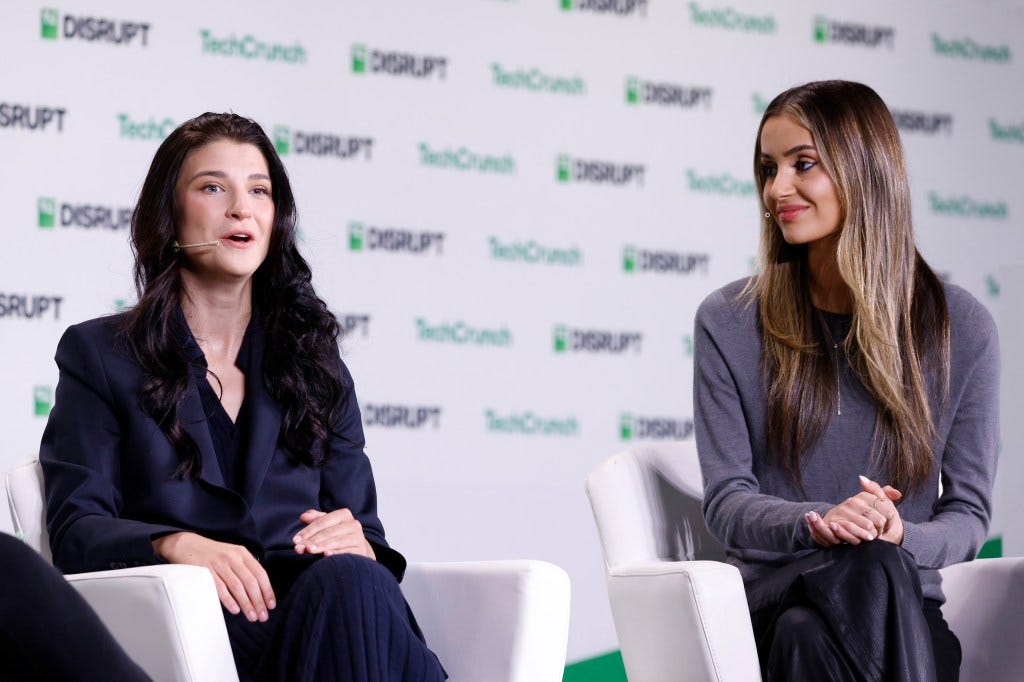
👉 Phoebe Gates and Sophia Kianni raise $30M for Phia — turning AI into a smarter, more ethical shopping layer
👉 Who they are:
– Phia, a New-York-based AI shopping startup focused on ethical, data-driven product recommendations.
👉 What’s unique:
– Phia landed $30M this week at a ~$180M valuation for an AI engine that recommends products based not just on price, but on sustainability, resale value, and environmental impact.
– Instead of chasing generic “Amazon-style” personalisation, Phia trains on a curated dataset of brands, ethical sourcing labels, and second-hand markets, giving users signal rather than noise.
– It’s an unexpected attack on e-commerce discovery: a purpose-led AI layer that helps shoppers buy better, not more — and a reminder that while it’s easier to get meetings when you start with a Gates-level Rolodex, the product still has to justify the attention.
👉 Pinch-this lesson:
– Differentiate your AI by encoding a point of view — a strong product plus a strong network is powerful, but only the product compounds.

🛠️ Tools of the Week
The Phia story this week reminded me how fast AI is reshaping the way people discover, compare and trust products online. So this edition leans hard into tools that help founders build smarter, more transparent, more opinionated shopping experiences. Whether you’re running an e-commerce brand, a marketplace, or a vertical-specific AI layer, these ten tools will get you moving today.
—————————————————————————
1. Shopify Magic – Personalised Recommendations Update (NEW)
URL:
What it does: Adds AI-driven product recommendation blocks that adapt to shopper intent in real time.
Why founders should care: It gives you Amazon-style recommendation quality without building your own ML pipeline.
Quick start tip: Add the Magic block to your PDPs and run A/B tests on conversion uplift this week.
—————————————————————————
—————————————————————————
2. Klarna “Eco Filter” AI Scoring (NEW)
URL:
What it does: Scores product sustainability and ethical sourcing using AI classification.
Why founders should care: If your buyers care about resale value or impact, this is an instant trust signal.
Quick start tip: Enable the Eco Filter in your merchant dashboard and tag your catalogue for transparency.
—————————————————————————
—————————————————————————
3. Google Merchant Center – AI Product Enhancement Tools (NEW)
URL:
What it does: Automatically enriches product listings with AI-generated attributes like materials, fit, and sustainability markers.
Why founders should care: Better structured data means higher ranking in Shopping and a cheaper CAC.
Quick start tip: Sync your feed and let AI autofill missing product attributes to improve listing quality.
—————————————————————————
—————————————————————————
4. Algolia NeuralSearch 2.1 (NEW)
URL: https://www.algolia.com/neuralsearch
What it does: Provides hybrid keyword + vector search for accurate product discovery without model tuning.
Why founders should care: It matches Phia’s “signal over noise” ethos — better search = higher conversion.
Quick start tip: Replace your site search API call with NeuralSearch and measure query success rate.
—————————————————————————
—————————————————————————
5. Miso AI “Taste Profile Engine” (NEW)
URL:
What it does: Builds a personalised shopper profile from micro-signals like browsing, ethical tags, and resale habits.
Why founders should care: It’s the closest off-the-shelf equivalent to the Phia ethos.
Quick start tip: Connect your Shopify integration and enable the Taste Profile widget on product pages.
—————————————————————————
—————————————————————————
6. Klaviyo AI Segments (Last 30 Days)
URL:
What it does: Groups shoppers by intent, sustainability interest, price sensitivity, and brand affinity.
Why founders should care: Smarter segmentation drives better retention without increasing ad spend.
Quick start tip: Swap generic email sends for intent-based flows using Klaviyo’s AI segments.
—————————————————————————
—————————————————————————
7. Vervaunt “Ethical Commerce AI Auditor” (Last 30 Days)
URL:
What it does: Analyses your catalogue and flags transparency gaps, ethical sourcing issues, and weak product metadata.
Why founders should care: Phia-style value propositions require trustworthy product data.
Quick start tip: Run the audit and fix the top three metadata gaps today.
—————————————————————————
—————————————————————————
8. Constructor “AI Discovery Suite” (Last 30 Days)
URL:
What it does: Provides AI-led search, browse, quiz-based personalisation, and intent detection for ecommerce.
Why founders should care: Helps smaller teams match enterprise-level discovery without heavy engineering.
Quick start tip: Start with the browse optimisation module before moving to full discovery.
—————————————————————————
—————————————————————————
9. Nosto’s AI Commerce Experience Platform (Evergreen + Major Update)
URL:
What it does: Creates dynamic storefronts based on user preferences like sustainability, resale value, and ethical brands.
Why founders should care: It’s a practical way to mirror Phia-style values without building a full stack.
Quick start tip: Enable dynamic category pages tailored to behaviour and intent.
—————————————————————————
—————————————————————————
10. Pachama Impact API (Evergreen + Major Update)
URL:
What it does: Gives each product a verified environmental footprint score you can show to shoppers.
Why founders should care: Adds credibility to sustainability claims — crucial for “ethical shopping” AI layers.
Quick start tip: Pull Pachama’s impact score into product pages to increase trust and conversion.
—————————————————————————
The advantage now goes to founders who stop thinking of “AI” as a feature and start treating it as a discovery engine, a trust layer and a conversion driver. Pick one of these tools, integrate it this week, and ship a visible improvement for your customers—momentum compounds faster than optimisation.
📌 Note to Self

FOR THE ❤️ OF STARTUPS
Thank you for reading. If you liked it, share it with your friends, colleagues and everyone interested in the startup Investor ecosystem.
If you've got suggestions, an article, research, your tech stack, or a job listing you want featured, just let me know! I'm keen to include it in the upcoming edition.
Please let me know what you think of it, love a feedback loop 🙏🏼
🛑 Get a different job.
Subscribe below and follow me on LinkedIn or Twitter to never miss an update.
For the ❤️ of startups
✌🏼 & 💙
Derek