


Here’s your Monday dose of The AI Brief.
A week where the future arrived a little faster and a little stranger.
Plenty of breakthroughs, a few shocks, and one or two reminders that we’re building powerful systems on fairly wobbly rails.

📈 Trending Now
The week’s unmissable AI headlines.
💡 Innovator Spotlight
Meet the change-makers.
🛠️ Tool of the Week
Your speed-boost in a nutshell.
📌 Note to Self
Words above my desk.
📈 Trending Now
This week’s most important AI stories for founders, framers, and funders.
1. ⚖️ OpenAI Teen Suicide Case — Accountability Hits a Breaking Point
→ This week, OpenAI filed its most forceful response yet, arguing the teenager “misused” ChatGPT and actively bypassed safeguards. That wording — and the framing — triggered a fresh wave of criticism from academics, ethicists and regulators.
→ The backlash wasn’t about the old facts, but the new posture: OpenAI’s filing shifts liability away from system behaviour and towards user responsibility. Critics say that’s untenable for AI systems designed to be persuasive, conversational, and emotionally attuned.
→ The case has now escalated into the first major test of AI product liability — not whether the model once hallucinated, but whether AI companies owe a duty of care when their systems interact with vulnerable users. Governments and safety bodies have already signalled they’re watching this one closely.
→ Founders: this week’s filings make one thing clear — if your product touches mental health, decisions, or vulnerable users, you can’t rely on disclaimers or “intended use” language. Real guardrails, escalation paths and human-in-the-loop moments aren’t optional. They’re becoming the baseline expectation.
2. 🔍 Prosecutors Caught Using Hallucinating AI in Court Filings
→ A California DA’s office admitted to using AI to draft a criminal-case motion containing fabricated legal citations and non-existent case law.
→ Defence lawyers are now demanding a full audit of previous filings, raising serious due-process concerns.
→ Founders: Anything that may enter legal, medical, or compliance workflows must include provenance, citations, and audit trails.
3. 🎯 Michael Burry vs Nvidia — The “AI-Bubble” Showdown
→ Michael Burry has doubled down on Nvidia put options and compared the AI-infrastructure boom to the Cisco 2000 bubble: massive GPU spend with uncertain downstream revenue.
→ Nvidia fired back with a rare, aggressive memo defending its ecosystem dominance, arguing rivals—including TPUs—won’t dent long-term demand.
→ Founders: Watch depreciation curves—massive infra spend can flip from tailwind to headwind very quickly.
This is the playbook behind the headlines
Long before the Burry showdown, I broke down the core forces shaping the entire AI infra market — depreciation curves, sovereign choke points, financing risk, and who actually survives the correction. That 30 Oct series is your cheat sheet.
The Great AI Infrastructure Build-Out of 2025.


4. 💡 Google TPUs — The First Real Challenger to Nvidia’s AI Dominance
→ Google has opened its next-gen TPUs for broad enterprise deployment, positioning them as a cost-efficient, high-performance alternative to Nvidia GPUs.
→ Meta and several hyperscalers are reportedly exploring multi-billion-dollar TPU commitments as they diversify their compute stacks.
→ Founders: Optimise for multi-backend compute—it gives you resilience, cost advantages, and negotiation power.
5. 🧮 DeepSeek’s New Open Model — A Direct Hit to Proprietary AI
→ Chinese startup DeepSeek has released an open-source model that matches top global systems on mathematical reasoning, accelerating the shift toward low-cost, open-weights AI.
→ VCs report that most new AI startups pitching them are now building on Chinese open models to reduce GPU costs and API dependency.
→ Founders: Treat open-weights as a strategic edge—cost, latency, and data control now matter as much as raw performance.
🌐 China Offshoring AI Training to Evade US Chip Controls
→ China’s major tech firms (Alibaba, Baidu, ByteDance) are shifting training to Singapore and the Gulf to retain access to restricted Nvidia hardware.
→ This move is reshaping global AI compute supply chains and reducing US leverage.
→ Founders: Geopolitics is now part of your infra stack—choose partners and regions with clear, long-term stability.
6. 👷 MIT Study: AI Could Replace 11.7% of US Jobs — $1.2 Trillion in Wages
→ A new MIT analysis estimates that AI could already replace 11.7% of US jobs, particularly in finance, healthcare, and professional services.
→ The researchers emphasise task-level disruption, providing a zip-code-level map of where impact will hit first.
→ Founders: Your customers are under pressure to cut costs—position your product as talent-multiplier, not talent-replacement.
READ MORE»
GET THE MIT ICEBERG REPORT HERE
7. 📟 Ive + Altman Reveal Their Screenless AI Device Prototype
→ Jony Ive and Sam Altman have finally teased a pocket-sized, mostly screenless AI device positioned as a calm, ambient alternative to the smartphone.
→ Built around long-running “action models,” it aims to quietly execute real-world tasks in the background.
→ Founders: Start designing for voice, intent, and context—AI-native hardware will expect new UX patterns beyond screens.
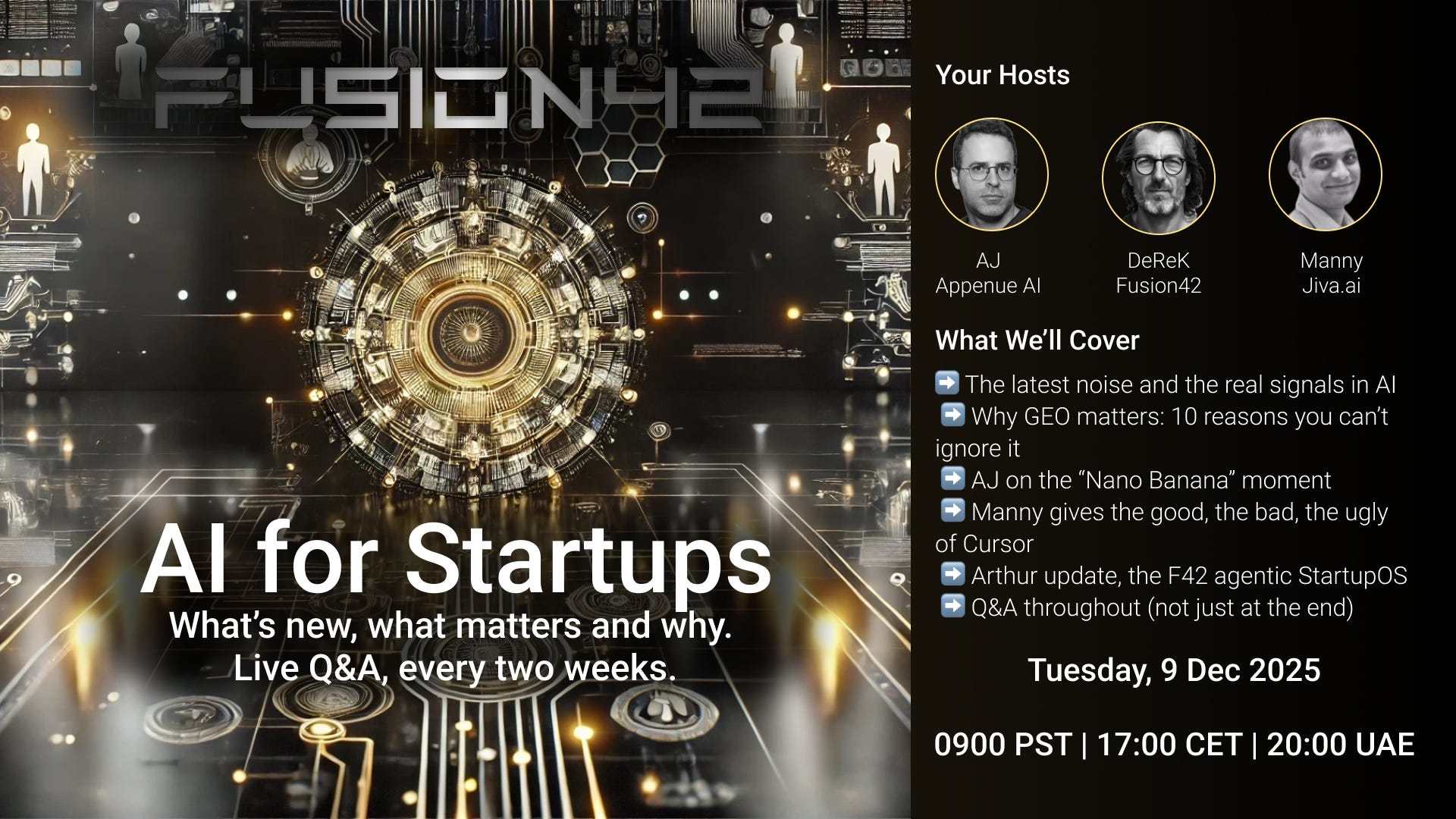
We are building Arthur, your agentic Startup OS that gets **it done for you.


💡Innovator Spotlight
👉 Harmonic — the “math-first” AI startup challenging hallucinations and rewriting trust in LLMs
👉 Who they are:
– Harmonic, a pre-revenue AI startup founded by Vlad Tenev (ex-Robinhood CEO), focused on mathematically verifying AI output.
👉 What’s unique:
– Harmonic just closed a $120 million Series C, bringing its valuation to $1.45 billion.
– Their flagship model “Aristotle” doesn’t just generate language — it produces logic as code (in Lean4). The result: instead of vague probabilities, users get formally verifiable proofs and reasoning paths.
– That flips the narrative on “AI hallucinations.” Instead of hoping models behave correctly, Harmonic builds systems where correctness can be audited by design — a shift most AI efforts still treat as optional.
👉 Pinch-this lesson:
– Demand verifiable logic from any AI you build — don’t treat hallucinations as a feature.
CLICK HERE TO GET EARLY ACCESS AND YOUR FREE FUEL UNITS
🛠️ Tools of the Week
This week’s picks lean into one theme: reliability. With Harmonic pushing verifiable logic into the mainstream, the spotlight shifts to tools that help founders build products that don’t hallucinate, drift or fall apart under real-world pressure. Here are the ten worth your time.
1. Google Antigravity IDE
URL:
What it does: Agent-first IDE for building, managing and running autonomous coding agents powered by models like Gemini 3.
Why founders should care: It lets you turn ad-hoc prompting into reusable agent workflows, speeding up product iteration with less manual dev grind.
Quick start tip: Install the preview, connect Gemini 3 Pro, and create one agent that automates a real recurring task in your codebase.
2. xAI Grok 4.1
URL:
What it does: Updated LLM with stronger reasoning, emotional awareness and a 2M-token context window plus API support for external tool-calling.
Why founders should care: It’s a solid base for logic-heavy or context-rich apps where hallucinations and context loss kill user trust.
Quick start tip: Swap one existing reasoning flow to Grok 4.1 via API and compare outcomes against your current model for a week.
3. Harmonic — Aristotle API
URL:
What it does: Returns formal reasoning as verifiable code (Lean4) instead of fuzzy natural-language guesses.
Why founders should care: If you’re in finance, compliance, safety or contracts, this gives you audit-ready logic instead of hand-wavy “probably correct” outputs.
Quick start tip: Wrap Aristotle in a small microservice that validates or double-checks decisions made by your primary LLM.
4. ToolUniverse
URL:
What it does: Framework for building “AI scientist” agents that combine reasoning, analysis, tool-calling and multi-step workflows.
Why founders should care: Ideal if you need repeatable, logic-driven research or analysis instead of one-off chat sessions.
Quick start tip: Define a single recurring research task, then build an agent in ToolUniverse to run that workflow end-to-end.
5. Magika
URL:
What it does: AI-powered file-type detection that classifies and routes files safely at scale.
Why founders should care: It cleans up your ingestion layer so you stop wasting time on brittle MIME checks and manual file handling.
Quick start tip: Drop Magika into your upload pipeline to auto-classify documents before parsing or feeding them into an LLM.
6. Anthropic Opus 4.5 Integrations
URL:
What it does: Latest Opus update with browser and spreadsheet integrations for reasoning directly inside everyday tools.
Why founders should care: You can ship value fast by augmenting workflows your users already live in, rather than building full new interfaces.
Quick start tip: Pilot Opus inside one internal spreadsheet process and measure time saved versus your current manual workflow.
7. Nemotron
URL:
What it does: Open models tuned for stable reasoning and longer-term memory across complex tasks.
Why founders should care: Good foundation for agents that must follow multi-step instructions consistently without veering off course.
Quick start tip: Fine-tune a Nemotron model on your own workflows and evaluate it on a fixed reasoning benchmark you care about.
8. Amazon Kiro (AI Coding Assistant)
URL: (search “Amazon Kiro” for updates)
What it does: Internal AI coding tool to build apps and sites from natural-language instructions.
Why founders should care: If and when it opens up, it could slash early engineering cost for prototypes and internal tools.
Quick start tip: Track the rollout and join any preview or waitlist so you can test a simple product idea without a full dev team.
9. DeepSeek R1
URL:
What it does: Open-source model family with strong mathematical and logical reasoning at lower cost than many closed models.
Why founders should care: Lets you run serious reasoning workloads on cheaper hardware, which matters if margins are tight.
Quick start tip: Deploy R1 on a modest GPU instance and route one verification or analysis task through it instead of your main LLM.
10. imec.kelis
URL:
What it does: AI-driven modelling tool to simulate and optimise AI datacentre and infra performance.
Why founders should care: If you’re planning bigger clusters, this helps you avoid overspending on compute you don’t actually need.
Quick start tip: Plug your expected workloads into kelis before signing any new infra contracts, and compare scenarios side-by-side.
If you’re building anything that depends on trust, reasoning or repeatability, these tools give you a head start. Test one this week, ship something sharper next week.
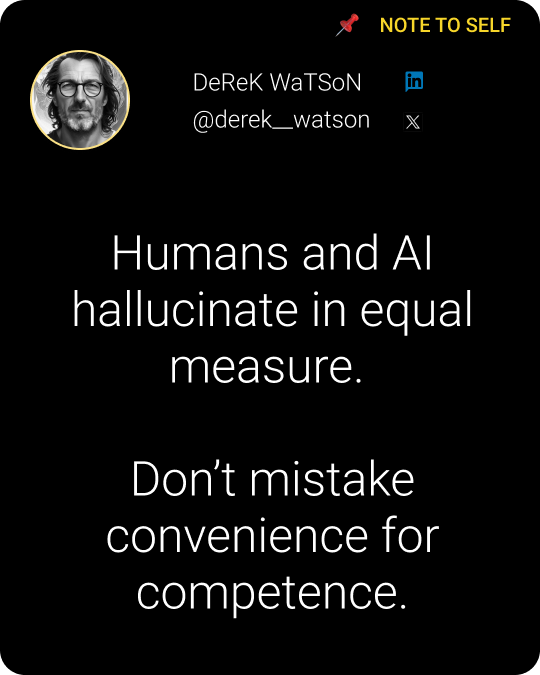
📌 Note to Self
FOR THE ❤️ OF STARTUPS
Thank you for reading. If you liked it, share it with your friends, colleagues and everyone interested in the startup Investor ecosystem.
If you've got suggestions, an article, research, your tech stack, or a job listing you want featured, just let me know! I'm keen to include it in the upcoming edition.
Please let me know what you think of it, love a feedback loop 🙏🏼
🛑 Get a different job.
Subscribe below and follow me on LinkedIn or Twitter to never miss an update.
For the ❤️ of startups
✌🏼 & 💙
Derek